
A project to map out every broken coffee maker in the sky
Aircraft Communications Addressing and Reporting System (ACARS) - an aviation radio system that is older than you, probably...
Plane flying over
Drama occurs onboard
Pilot reports drama via FMS keypad
Transmits unencrypted data over VHF
Signal captured by SDR
Operated by a sky drama farmer
Software decodes ACARS
Message parsed & cleaned
Posted to Drama engine
Message enters drama processing
Engine examines message
If drama found → post to feeds (after safety delay)
When an aircraft is flying overhead, various radio signals are being transmitted and received by said aircraft constantly. Some examples of the radio signals, of course, are voice communications between pilots and air traffic controllers, that most people are familiar with. These are, of course, critical for safety, and ensuring planes are at the right altitude, going in the right direction, and at the right speed.
In addition to voice, there are also a boat-load, well, plane-load I guess, of data signals. Amongst these data signals are the two types of signal that feed the bot’s insatiable thirst for drama. They are ACARS and VDLM2.
ACARS, which stands for Aircraft Communications Addressing and Reporting System, is a 1970’s era protocol that is still used today. A bunch of ground stations around the world are used to translate messages between computers in dispatch, maintenance and operations control rooms of the various airlines and their aircraft, and vice-versa, from the aircraft cockpit back to those airline computers.
VDLM2, which stands for VHF Data Link Mode 2, is similar in that it is a data transmission protocol that works over very high frequency (VHF) radio-waves, but it’s a bit more modern, uses different frequencies, is a bit faster, and can also carry ACARS messages.
So, in summary, ACARS is where the drama usually is, sometimes transmitted in raw ACARS form, other times it is encapsulated in VDLM2. Same result all round really, you just have to look in a slightly different place to decode the ACARS inside of VDLM2 messages.
There are lots of different open source software projects out there that work with software defined radios (SDR's) to capture ACARS transmissions. ACARS Drama takes the output from these various projects and formats them into posts you see on the bot's social feeds.
Below is an image of an FMC from a cockpit:
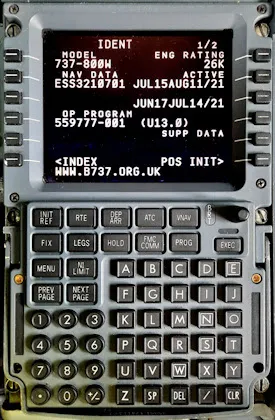
Now, because of how the system works, it's much harder to capture the ground to air signals, unless you live in close proximity to an airport or ground station. So this means that pretty much 99% of what you see on ACARS Drama is air to ground. Essentially one side of a conversation, from the plane to folks on the ground. Sometimes it picks up ground to air, but it’s rare - it just depends on where the receiving SDR is based. If you do see a ground to air message, the bot will say “ACARS Message To” instead of “ACARS Message From”.
Because of the sheer volume of the messages ACARS Drama processes these days (thanks to our wonderful team of volunteers), around 200,000 an hour, most of which are just position and weather data, and automated readings from equipment, it would not be reasonable to post them all via the bot. That would just be annoying. So, we have carefully curated a list of keywords that the bot looks for in the messages received, to ensure that it only shares the ones with human-entered, “free-text” content. So when you see a message on the bot, it means that a pilot or crew member on the aircraft typed that into their ACARS terminal, which is usually a Flight Management Computer (FMC) device, like the one shown above.
As a message is typed and sent via ACARS, if that plane is in range of one of our volunteer sky drama farmers (people with SDR's all over the world) , then it’ll be processed by the bot's software and turned into the bot post that you see on Masto/Bluesky like this:

In this example, the message was captured in the Austin, TX area, and was sent from air to ground. If you see a thread of messages it means they were sent as part of the same exchange between air and ground, or ground and air. We strip out the flight number and registration as part of the anonymization process, for safety and privacy reasons.
It’s fair to say that the overwhelming majority of ACARS messages transmitted are extremely routine and boring, contrary to the name of the bot — which to be honest, is part of the joke. So, you’ll mostly see things about asking for gate confirmations, reporting “snags” with the aircraft, usually toilet or coffee maker related, but occasionally you’ll see reports of drunk passengers, fights onboard — you know, air travel things. That’s what makes it an interesting and fun project. You also get to see the pilots’ personalities shine through as well, which we love. We all have good days and bad days at work, so you might see the occasional snarky message — but ultimately, these are professionals doing a wonderful job in not always the easiest of circumstances.
So that’s what you’re seeing and how the bot works. You can follow along at https://live.acarsdrama.com/@acarsdrama if you aren’t already.
If you're interested in contributing data to the project - there is a bunch more information on this website that you can use to get started - we'd love to have you!